
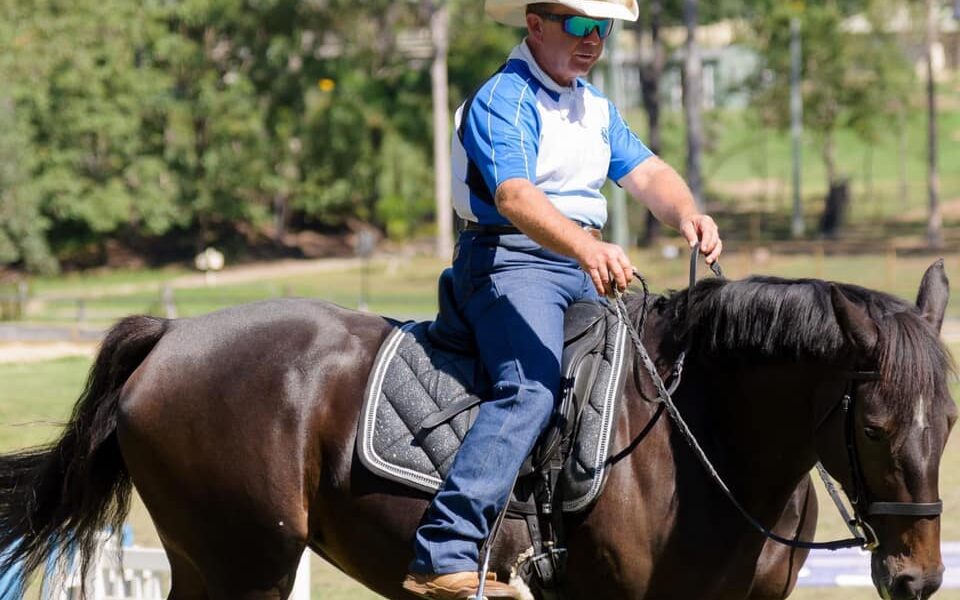
Starting a young horse begins with gaining trust. One of the first things I work on is being able to control the horse’s feet — controlling the direction of movement and, most importantly, being able to have the horse keep its feet still and settled. This can be accomplished through the use of a flag, together with moving the horse around you with control. I prefer to start at the walk. It helps keep the horse grounded, and as the educator, you need to keep your own thoughts and heart rate at a level you can control. We also use ropes to teach the horse how to give its feet willingly. They may be unsure to begin with, but being Firm, Fair and Friendly will get you there.
Time is not a factor. Things will take on their true form when they evolve, no sooner.
Teaching the Horse to Think
An important part of the process is being able to contain the horse while helping it understand that it is not confined. Instead, the horse learns to trust what you offer and accept the circumstances with respect. This is why I use hobbles as part of the program. While they restrain the horse’s movement, the purpose is to encourage the horse to think with its head rather than react with its feet.
Instead of simply running away from something it is unsure of, we want the horse to stop, consider the situation and find another answer. We aren’t trying to teach the young horse that nothing will ever frighten it. We’re teaching it that when something does, it can stop, think and trust. This helps build confidence in the horse and trust in us. But these things must be built gradually.
Preparing for What Comes Next
Once those foundations begin to develop, I can introduce many other experiences into the program within a relatively short period of time. These may include saddling, mounting and desensitisation to things such as bags, stock whips, balls being kicked or thrown around, and other movement. We also work on safely rugging the horse and using a lariat over and around the horse’s head. This can help reduce head shyness and encourage the horse to become more accepting of movement around it. We repeat these experiences many times until they simply become part of the norm.
But remember, nothing with a horse is guaranteed. They are a living, breathing, decision-making creature, and just because we ask something of them does not guarantee its success.
Success is earned, not given.
It requires effort, hard work, patience and creative thinking.
Confidence Through Another Horse
There is also great value in having an older, quiet horse with a good disposition around a younger horse. A calm, experienced horse can help give the younger horse confidence, particularly when we reach that important first ride. The younger horse can sense from the older horse that expresses:
“It’ll be alright mate”
That steady presence can make an enormous difference.
Trust Goes Both Ways.
Perhaps the most important part of all is the owner rider. They need to trust themselves, trust the clinician and have faith in their horse. Colt starting (Starting a young horse), isn’t simply about getting a saddle on a young horse or achieving that first ride. It is about building the foundations of trust, confidence and understanding that horse and rider can continue to develop from.
There will always be more to learn. All the best on your journey. It’s only just begun.
Cheers
Peter Biggs, Horse Clinician.
Subscribe to Just Equus and stay up to date with latest newsSign Up
Website created by RJ New Designs